


Hard wax oil is a penetrating wood finish made from natural oils and hardening wax. The oil soaks into the fibre and the wax settles near the surface, so the wood keeps a natural matte look and stays repairable in place.
Its strengths: it feels like real wood, repairs are easy, and upkeep is simple. Its limits: it needs a good sanding first, a few days to harden before it gets wet, and it's mainly for indoor wood.
What hard wax oil actually is
Hard wax oil is two things working together: oil and wax.
- The oil, usually a plant oil like linseed pressed from flax seed, has small molecules that travel deep into the wood cells.
- The wax, a hardening wax, stays nearer to the surface and adds water repellence and a soft sheen.
- Some formulations also carry pigments for colour and a drying agent to speed up the cure.
The first true hard wax oils appeared in the 1990s, when oil and wax were combined into a single product rather than rubbed in separate steps. That is the finish that has been quietly taking over from older surface treatments on floors and furniture ever since.
Discover hard wax oil by Rubio Monocoat
How it works: a penetrating finish
Hard wax oil does not build a layer on top of the wood. The oil bonds with the top fibres, the waxes knit near the surface, and the wood grain stays open enough to breathe. There is no separate coating sitting over the timber. That single fact is the source of almost every advantage and every limitation the finish has.
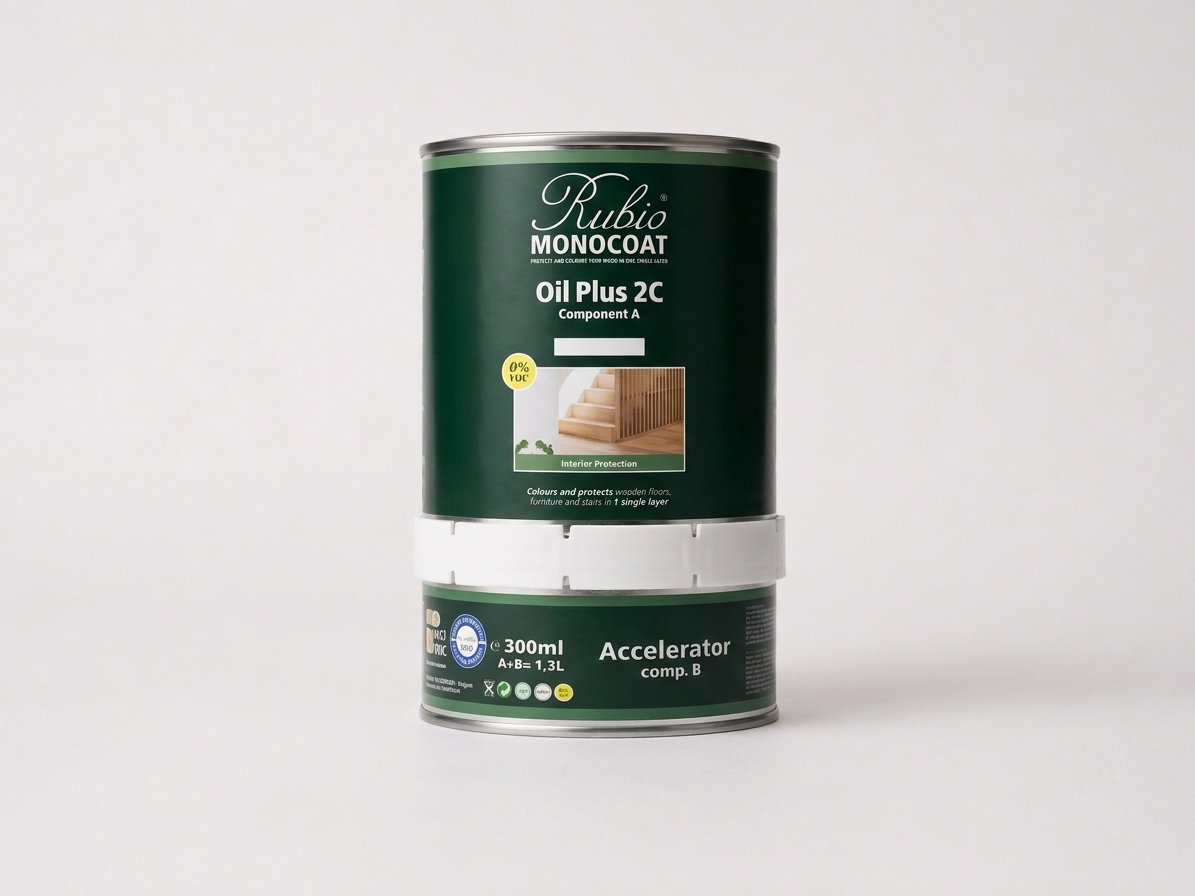
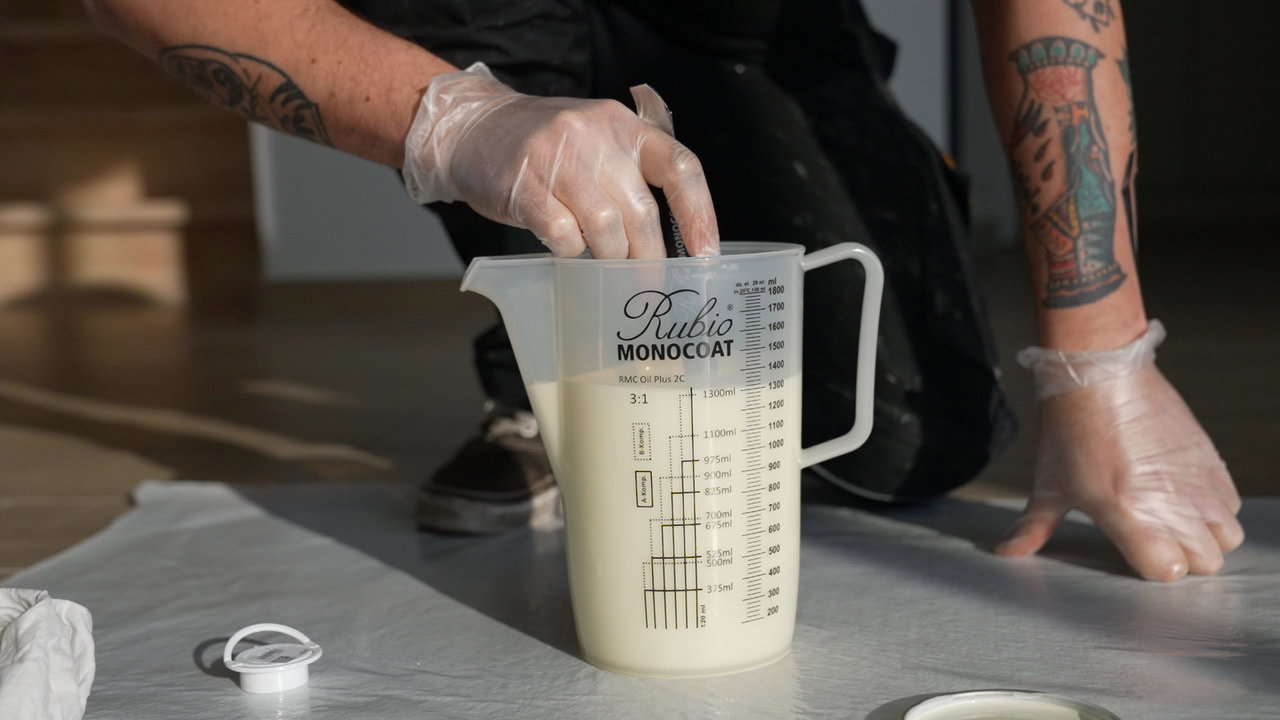
Two-component hard wax oils such as Rubio Monocoat Oil Plus 2C. The oil bonds molecularly with the upper microns of the wood fibre within minutes, which is why a second layer adds nearly nothing. The wood takes what it needs and no more, so there are no overlaps and no starting marks across a large floor.

Single-component or two-component?
- Single-component hard wax oils are usually oxidative. They dry by reacting with oxygen in the air, which means rather slowly. Full cure can take up to 30 days, and during that time the surface is vulnerable to water and stains.
- Two-component hard wax oils add a hardener you mix in before application. This part drives a chemical reaction alongside the reaction with oxygen air-drying, so the finish cures much faster and ends up harder and more resistant. Full cure is typically around a week, and a two-component oil stands better to spills and daily wear.
| Property | Single-component | Two-component |
|---|---|---|
| How it cures | Reacts with oxygen | Reacts with oxygen plus a hardener reaction |
| Full cure | 30 days or longer | Around 5 to 7 days (Oil Plus 2C: 80% in 2 days) |
| Coats | Often a second coat | A single layer with Oil Plus 2C |
| Resistance | Good | Higher wear, water and heat resistance |
| Best for | Light-use furniture | Floors, stairs, worktops, high-traffic and commercial |
Hard wax oil: the pros & cons
Hard wax oil earns its place for honest reasons, and it asks for a few things in return.
- Natural matte look, with grain and texture still visible and tactile
- Local repair of worn or scratched areas, no full sand
- Never peels or flakes, there is no film to lift
- The wood can still breathe and move with humidity
- Simple upkeep: dust, an occasional damp clean, a refresh layer every few years
- Single layer with a two-component oil, no overlaps or starting marks
- 0% VOC, non-toxic and toy-safe certified options exist
- Needs proper sanding, too fine a grit stops the oil penetrating
- Sensitive to water and stains until it has fully cured
- Needs occasional maintenance, a neglected surface shows wear and picks up dirt sooner
- Hard wax oils are not made for outdoor conditions
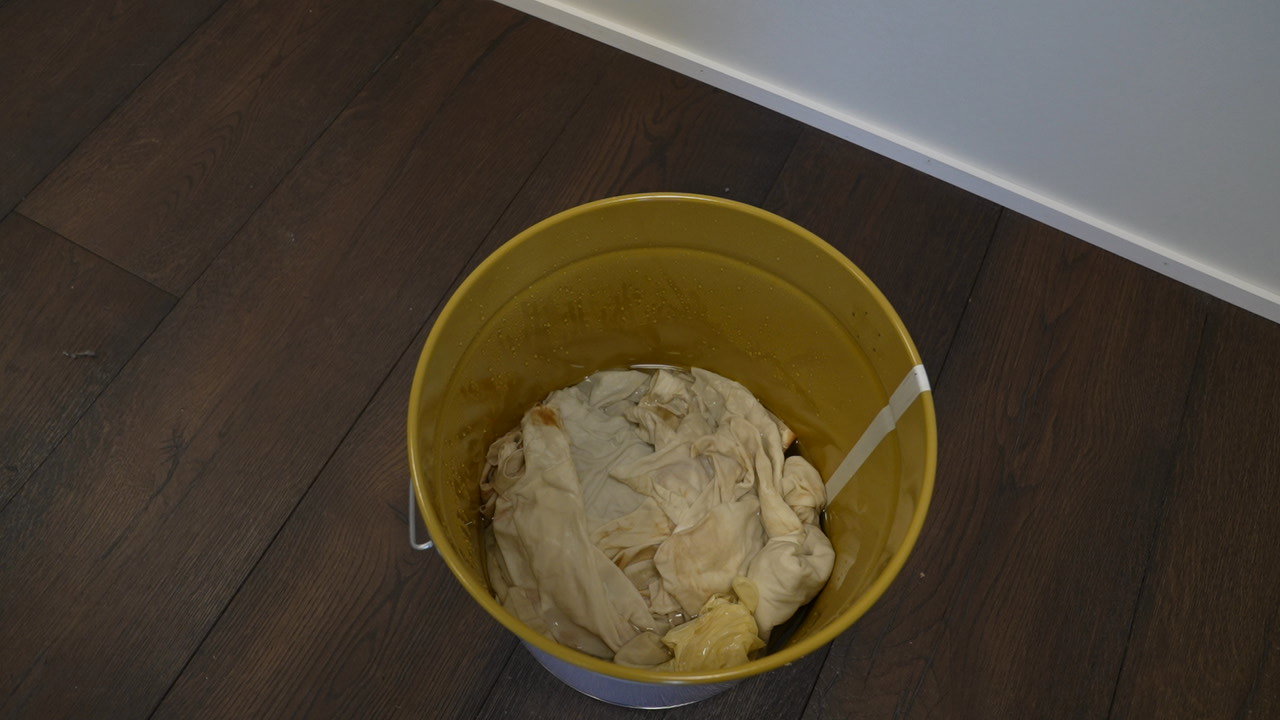
- Oil-soaked cloths can self-combust, soak them in water before disposal
The main cons, in practice
Preparation
A hard wax oil only protects as well as the sand job underneath it, and a colour will show every scratch and swirl you leave behind, so the sanding must be even and finished to the right grit.
Curing time
Until the finish has cured, keep water and cleaning off it, and wipe spills promptly. Get this right and the maintenance side looks after itself.
Where hard wax oil fits best
Hard wax oil is an excellent choice for interior wood that you want to look and feel like wood:
- Floors & stairs in homes, offices and busy commercial spaces
- Furniture, tabletops & worktops, including kitchen surfaces when the oil is food-safe certified
- Cabinetry, paneling & interior joinery
It is at its best where indoor air quality matters: schools, kitchens, nurseries, healthcare and family homes, thanks to its 0% VOC, non-toxic and toy-safe characteristics.
Hard wax oils are however not built for extensive UV exposure, rain and freeze-thaw. Exterior wood needs a dedicated finish made for the outdoors (e.g. Rubio Monocoat DuroGrit).
Tip: if you are still weighing up which type of finish to use in the first place, our wood finish decision hub walks through the options and points you to the right one for the job.
How to apply hard wax oil in a single layer
-
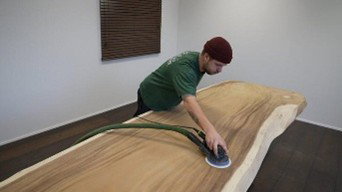
01 Sand properly
Sand scratch-free and finish at 100 grit for floors, or 100 to 150 grit for furniture, stairs and worktops. Do not polish the wood closed with too fine a grit, or the oil cannot get in.
-
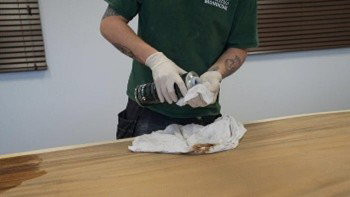
02 Clean off every speck of dust
Vacuum, then go over the surface with Cleaner and let it dry completely. Any contamination weakens the bond.
-
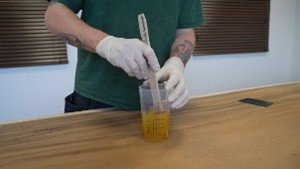
03 Mix the two components
Stir Component A until even, then mix in Component B at roughly three parts A to one part B. Once mixed, use it within 4 to 6 hours.
-
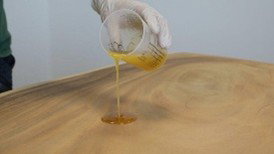
04 Apply a thin, even layer
Spread with a beige or red pad, a brush for floor borders, or a spatula for tabletops. Work in zones of 5 to 10 m² on floors, in the direction of the grain.
-
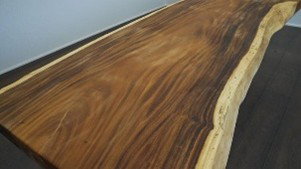
05 Let it absorb for a few minutes
Give the oil a moment to penetrate the fibre.
-
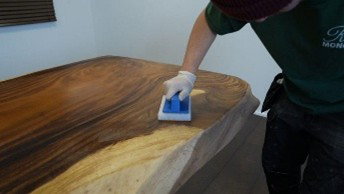
06 Wipe off all the excess
This is the step people skip and regret. Remove every drop of surplus with a white pad or lint-free cloth within about 15 minutes. The surface should feel dry, not sticky.
-
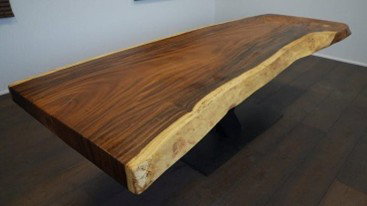
07 Let it cure
Light foot traffic after about 12 hours, 80% cured in 2 days, full cure in around 5 to 7 days. Avoid water and cleaning for the first 5 days.
Note: work between 8 and 30 °C. Soak all cloths and pads in water before disposal; oil-soaked rags can self-heat and catch fire.
Looking after a hard wax oiled surface
One of the main advantages of hard wax oil is how little it asks of you, and how forgiving it is when something goes wrong.
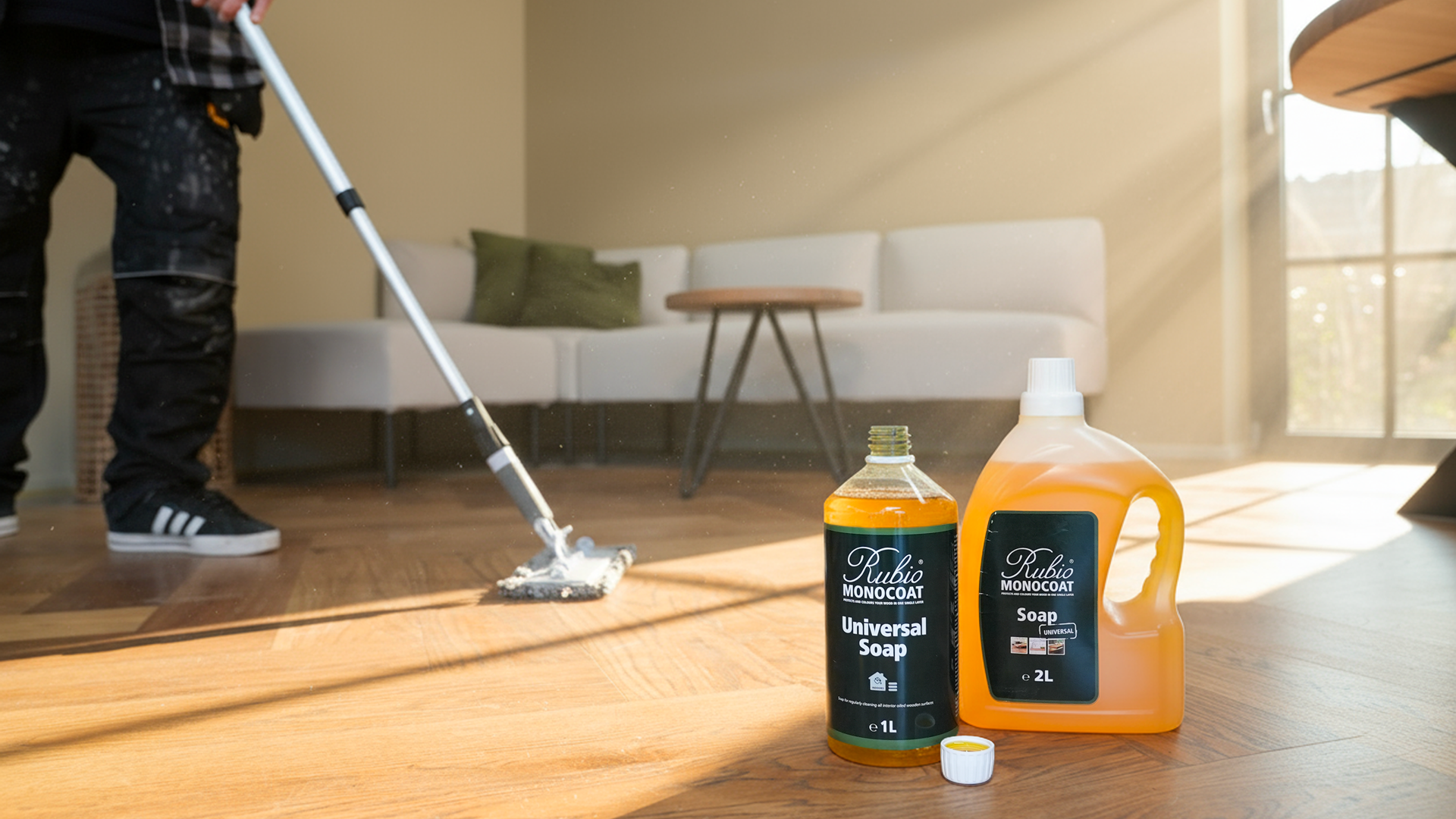
- Day to day: dry dusting or vacuuming. Once cured, damp-clean no more than once a week with wood soap. Do not leave water standing, and do not over-soap, or you build a film that attracts dirt.
- Every few years: when a floor or worktop starts to look dry, a maintenance coat refreshes it, often in a single afternoon and with no sanding. Typical intervals are every 3 to 5 years depending on use.
- When something gets damaged: clean the spot, work a little oil in the original colour into it, wipe back. The repair blends in.
Hard wax oil coverage, cure & certifications
| Property | Rubio Monocoat Oil Plus 2C |
|---|---|
| VOC content | 0% (certified) |
| Coverage | 30 to 50 m² per litre |
| Drying time | 12 to 24 hours |
| Cure time | 5 days (80% cured in 2 days) |
| Coats needed | A single layer |
| Working temperature | 8 to 30 °C |
| Certifications | GreenGuard Gold, Eurofins Indoor Air Comfort Gold, A+ Label, EN 71-3 (toy safety), food-contact compliant (EU 1935/2004 and FDA 21 CFR 175.300) |
Coverage depends on wood type and preparation, so treat the figures as indicative and always make a sample to calculate exact usage. Those certifications are why a 0% VOC hard wax oil is specified for schools, kitchens, worktops and children's furniture, where the air and the surface both have to be safe.

Ready to put it on real wood?
Order a 6 ml sample of Oil Plus 2C to test the colour on a leftover piece of wood, browse the 40-colour palette, or find your nearest stockist. Make a sample first: the final colour depends on the wood species and how it is sanded.
Frequently asked questions
What is hard wax oil used for?
Hard wax oil protects and finishes interior wood while keeping its natural look: floors, stairs, furniture, tabletops, worktops, cabinetry and paneling. Because it penetrates the fibre rather than forming a surface layer, it can be spot-repaired in place.
A two-component hard wax oil such as Oil Plus 2C is hard-wearing enough for kitchens, busy family homes and commercial spaces.
What are the disadvantages of hard wax oil?
Hard wax oil has three limitations.
- First, surface preparation matters more than with a film finish: if the wood is sanded too fine (beyond 120 grit on most species), the pores close and the oil cannot penetrate properly. Colours will look uneven, and any scratch in the prep will show.
- Second, the surface is vulnerable to water and household liquids for the first five to seven days while the oil cures; spills during that window can leave marks.
- Third, interior hard wax oil is not formulated for outdoor exposure. UV radiation and rain require a dedicated exterior product such as DuroGrit or WoodCream.
Is hard wax oil ‘food safe’?
It depends on the product, so make sure to always check the certification. Some hard wax oils are certified for food contact, and some are not. Oil Plus 2C by Rubio Monocoat is compliant with European Framework Regulation 1935/2004 as well as American FDA 21 CFR 175.300 once fully cured, which means it can be used on cutting boards, kitchen worktops and tabletops that meet food.
Can I apply hard wax oil in a single layer?
It depends on the product. Most hard wax oils are applied in two thin coats, because they protect by saturating the grain and a single coat does not fill it.
The exception is a molecular-bonding oil like Oil Plus 2C: the oil bonds chemically with the cellulose and lignin in the top fibres of the wood, so the wood takes what it needs in one pass, and a second coat adds nothing.
How long does hard wax oil take to dry and cure?
Drying and curing are different things. Drying just means the surface is no longer wet to the touch and can handle light use. Curing means the finish has fully hardened all the way through, which is what actually gives it its final water and stain resistance.
Rubio Monocoat Oil Plus 2C dries fast: it can take light foot traffic after about 12 hours.
Curing takes longer and happens in stages, reaching about 80% cured after 2 days and fully cured after 5 to 7 days. Single-component hard wax oils dry in a similar way but cure much more slowly, sometimes taking up to 30 days to fully cure.
Because of this difference between drying and curing, avoid exposing any hard wax oil finish to water or cleaning products until it has fully cured, even if it feels dry to the touch well before that.
Can you use hard wax oil outdoors?
Interior hard wax oils such as Oil Plus 2C are formulated for indoor use only. Outdoor wood faces UV, rain and freeze-thaw cycles that need a different chemistry, so exterior timber should be finished with a product made for outdoor conditions rather than an interior hard wax oil.
Further reading

Jan Torfs
Jan Torfs is Global R&D Director at Rubio Monocoat. With over 20 years at the forefront of wood protection technology, Jan leads the science behind the company's single-layer oil system, 0% VOC standards, and third-party certification. His work covers everything from molecular bonding to food-safe and toy-safe compliance.